


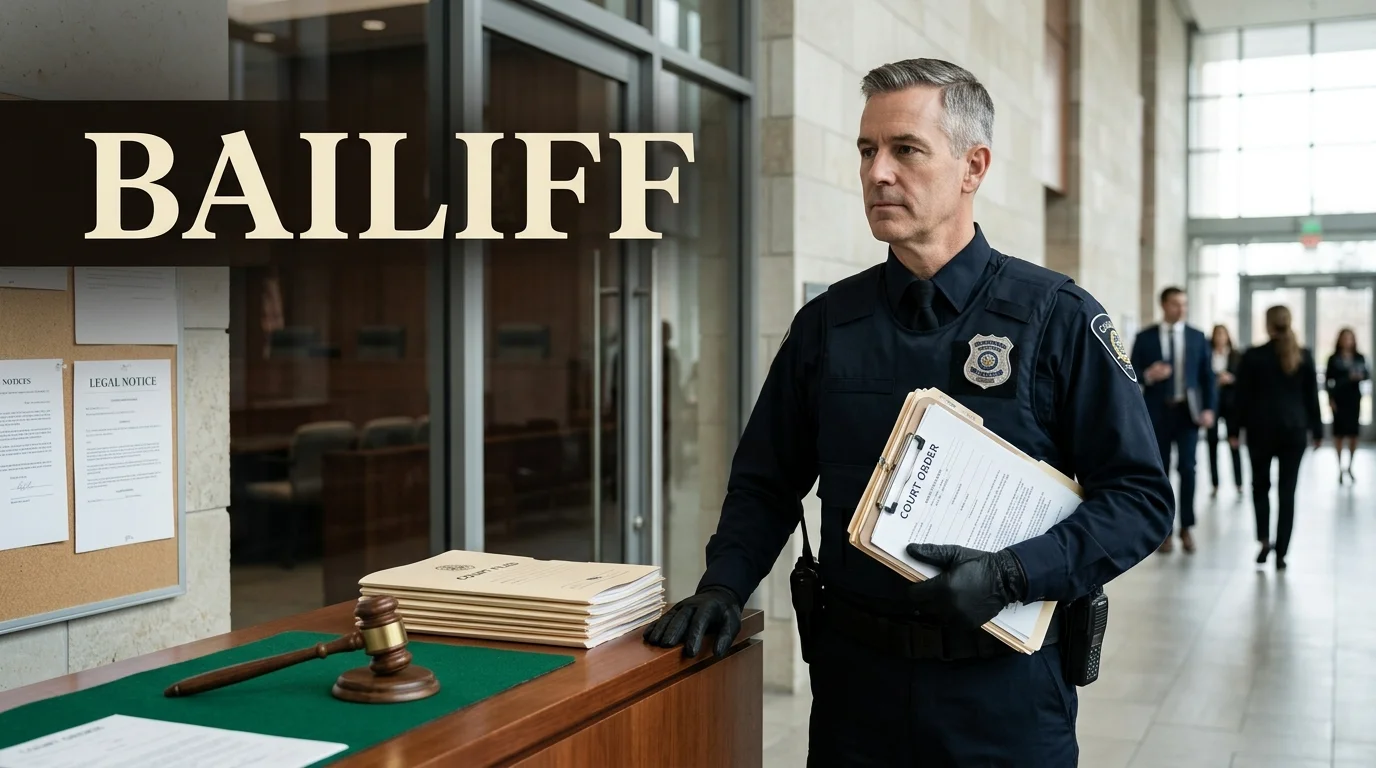
Short answer: A bailiff is a court-related officer whose duties depend on the legal system. In the United States, the role usually centers on courtroom security, maintaining order, transporting prisoners, and protecting juries. In England and Wales, the same word commonly refers to enforcement agents who carry out court orders and collect certain debts. You might also like Tessarion Dragon.
That distinction matters because the title does not describe one universal job. Powers, duties, training requirements, and even the officer’s workplace can vary by country and jurisdiction. Understanding the context helps you avoid confusing courtroom officers with debt enforcement agents or private debt collectors.
| Question | Quick answer |
| Main U.S. function | Courtroom security, maintaining order, supervising prisoners, and supporting judges and juries |
| Common related U.S. titles | Court officer, court deputy, and court security officer |
| England and Wales | The official modern term is usually “enforcement agent” |
| Typical U.S. preparation | The occupation generally requires a moderate level of preparation |
| U.S. median pay | $56,600 per year in 2025 |
| Most important caution | Never assume that powers in one country apply in another |
Key Takeaways
- In U.S. courts, these officers mainly protect the courtroom and maintain order.
- Their work may include screening visitors, escorting prisoners, protecting juries, and assisting judges.
- Some are peace officers or sheriff’s deputies, but titles and authority vary.
- In England and Wales, the same everyday term can refer to a very different enforcement role.
- Career requirements depend on the employer, local laws, and the officer’s underlying position.
- Anyone facing debt enforcement should check official local rules rather than rely on a general definition.
What Does a Bailiff Do in a U.S. Courtroom?
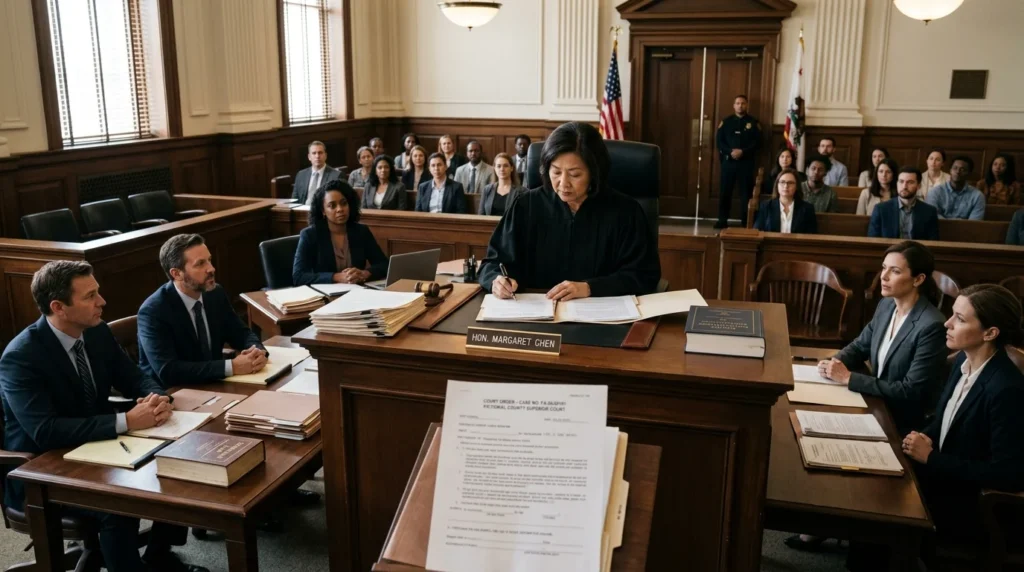
In the United States, the position is closely tied to courtroom safety and orderly proceedings. The role commonly involves serving as a court official responsible for maintaining security and helping proceedings run without disruption.
Typical duties can include:
- screening people entering a courthouse;
- escorting prisoners between holding areas and courtrooms;
- maintaining order while court is in session;
- guarding juries and limiting unauthorized contact;
- protecting judges, staff, witnesses, and other participants;
- announcing the judge’s entrance;
- helping manage courtroom documents or evidence; and
- assisting members of the public inside the courthouse.
The job can appear quiet when proceedings run smoothly. Much of its value comes from preventing disruptions before they become serious.
An officer may watch the audience, respond to instructions from the judge, or control access to restricted areas. When someone becomes disruptive, authorized court personnel may remove that person and restore order.
The exact job title can also vary. A courthouse may use terms such as court officer, deputy, security officer, or courtroom deputy instead. In some federal courts, duties traditionally associated with this position may be handled by courtroom deputies or other court personnel.
The Same Word Has a Different Meaning in England and Wales
This is one of the most important details that short definitions often miss. In England and Wales, the official term is generally enforcement agent, although the older everyday name remains common.
These agents may enforce court judgments, collect certain unpaid debts, or take control of goods when the law allows it. That work is fundamentally different from standing beside a judge in an American courtroom.
| U.S. courtroom role | England and Wales enforcement role |
| Focuses on court security and order | Focuses on enforcing certain debts or court orders |
| May escort prisoners and protect juries | May visit homes or businesses under lawful enforcement authority |
| Often connected to a sheriff’s office, court, or security unit | May be a certificated enforcement agent or court enforcement officer |
| Authority depends on the officer’s appointment and local law | Powers depend on the type of debt, court order, and applicable enforcement rules |
Enforcement agents normally have to follow rules governing notice, entry, and the seizure of goods. Their powers are not unlimited. Private debt collectors are also different from enforcement agents and do not automatically have the same legal powers.
For readers researching debt, enforcement, or court procedures, NewsHeck’s Law section is the most relevant internal hub for related legal explainers.
How Much Authority Does a Courtroom Officer Have?
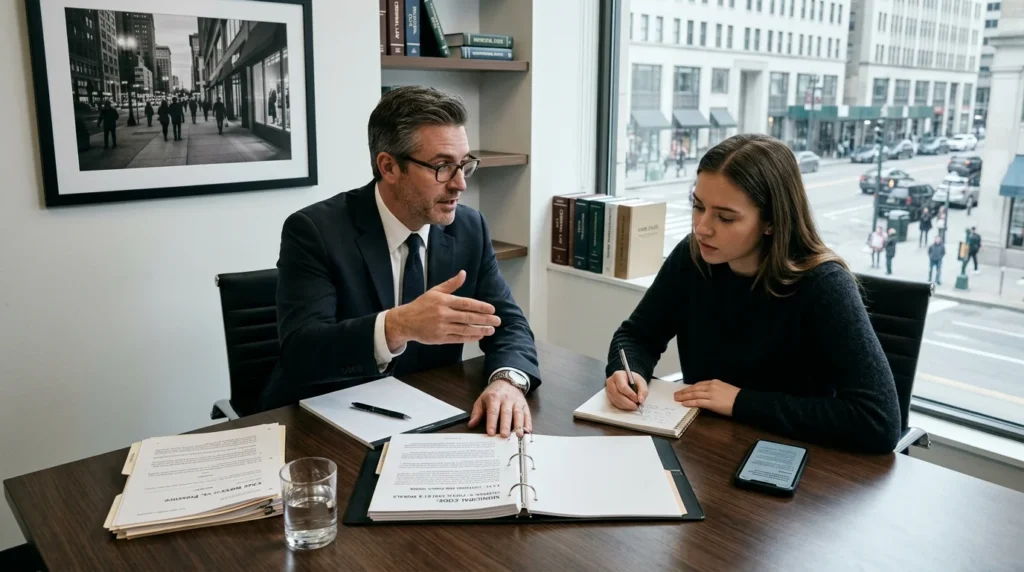
There is no single answer that applies everywhere. In the U.S., an officer’s authority often depends on the person’s underlying position. Someone serving as a deputy sheriff may have powers that a courthouse employee without sworn law-enforcement status does not have.
Possible duties can include making arrests when valid warrants have been issued. They may also include security screening, prisoner supervision, rule enforcement, and the protection of court personnel. Their authority should always be understood in accordance with the laws and policies of the jurisdiction in which they serve.
That leads to a useful rule: the job title alone does not tell you the full extent of someone’s legal powers.
A person researching an officer’s authority should check:
- the country, state, province, or territory;
- the officer’s employer;
- whether the person is a sworn law-enforcement officer;
- the court or agency rules governing the situation; and
- any specific warrant, judgment, or court order involved.
This approach is safer than applying a broad internet definition to a real legal dispute.
How This Role Differs From Police Officers, Sheriffs, and Court Clerks
Several courthouse jobs can look similar from the public gallery.
Police officers have broader law-enforcement responsibilities outside the courtroom. Their work can include patrol duties, investigations, emergency response, and arrests.
Sheriffs and deputy sheriffs may provide courthouse security, transport prisoners, and serve legal documents. In some U.S. jurisdictions, deputies perform the courtroom role discussed here.
Court clerks handle administrative and procedural work. They manage records, filings, schedules, and other court functions rather than providing primary physical security.
A courtroom security officer can work closely with all three groups. That cooperation does not make the positions interchangeable.
The distinction becomes even more important when reading international material. A job title that suggests courtroom security in one country may describe civil enforcement in another.
How to Enter the Career in the United States
There is no nationwide hiring standard for every courthouse. The occupation generally requires a moderate level of preparation. Depending on the employer, workers may need vocational training, related experience, on-the-job instruction, or postsecondary education.
Education requirements still differ by employer. In some positions, a high school diploma or equivalent may be sufficient. Other agencies may require additional training, certification, or experience.
Applicants may also face requirements related to:
- background checks;
- law-enforcement or security experience;
- physical fitness;
- firearms qualifications for armed positions;
- state or local certification;
- courtroom procedure training; and
- communication and conflict-management skills.
Important skills include monitoring, speaking, active listening, critical thinking, and sound judgment. Knowledge of law, security procedures, and public safety can also be valuable.
Readers exploring public-service careers can also browse NewsHeck’s Education section for broader learning and career material.
Salary and Job Outlook in the United States
The reported U.S. median wage for the occupation was $56,600 per year in 2025, or about $27.21 per hour. Pay can vary substantially by state, employer, seniority, union coverage, and whether the position is in a sheriff’s department or another law-enforcement agency.
Employment opportunities can also vary by location. Even when overall employment growth is limited, openings may still arise due to retirements, turnover, or workers moving into other roles. That makes local job listings especially important. A county courthouse may require qualifications that differ from those used by a state judicial system or sheriff’s office.
A Quick Way to Understand the Title Correctly

When you see this job title in an article, court document, television report, or job advertisement, use a four-step check.
- Identify the country. The U.S. meaning can differ significantly from the meaning used in England and Wales.
- Check the employer. A sheriff’s office, court administration, and private enforcement firm can involve very different responsibilities.
- Look at the task. Courtroom security suggests one role, while debt or judgment enforcement suggests another.
- Verify the legal authority. Official court or government guidance matters more than a generic dictionary definition.
This simple check helps prevent one of the biggest sources of confusion surrounding the term.
For broader reporting and explainers about law, society, and public institutions, NewsHeck’s Featured section provides another internal path for readers.
The Bottom Line
The title can describe very different jobs depending on where you encounter it. In a U.S. courtroom, the work usually centers on security, maintaining order, supervising prisoners, and supporting judges and juries. In England and Wales, the familiar term often refers to civil enforcement work instead.
If you’re researching the career, start with the hiring information provided by your local court or sheriff’s office. If you’re dealing with enforcement action, consult official government or court guidance for your location before making a legal decision.
Frequently Asked Questions
Not automatically. In the United States, people performing this courtroom function may be peace officers, deputy sheriffs, court officers, or other authorized court personnel. Staffing arrangements and job titles vary by jurisdiction.
Some can. Their arrest powers depend on their legal status, appointment, and jurisdiction. An officer who is also a sworn deputy sheriff may have different powers from a nonsworn courthouse employee.
Yes. Their duties may include guarding juries, preventing unauthorized contact, and helping preserve court security during trials.
No. An enforcement agent may have specific legal powers connected to enforcing certain court orders or debts. A private debt collector does not automatically have those same powers.
Check the person’s identity, the type of debt or court order involved, and the official rules that apply in your location. Do not assume that rules from another country or jurisdiction apply to your situation.
