


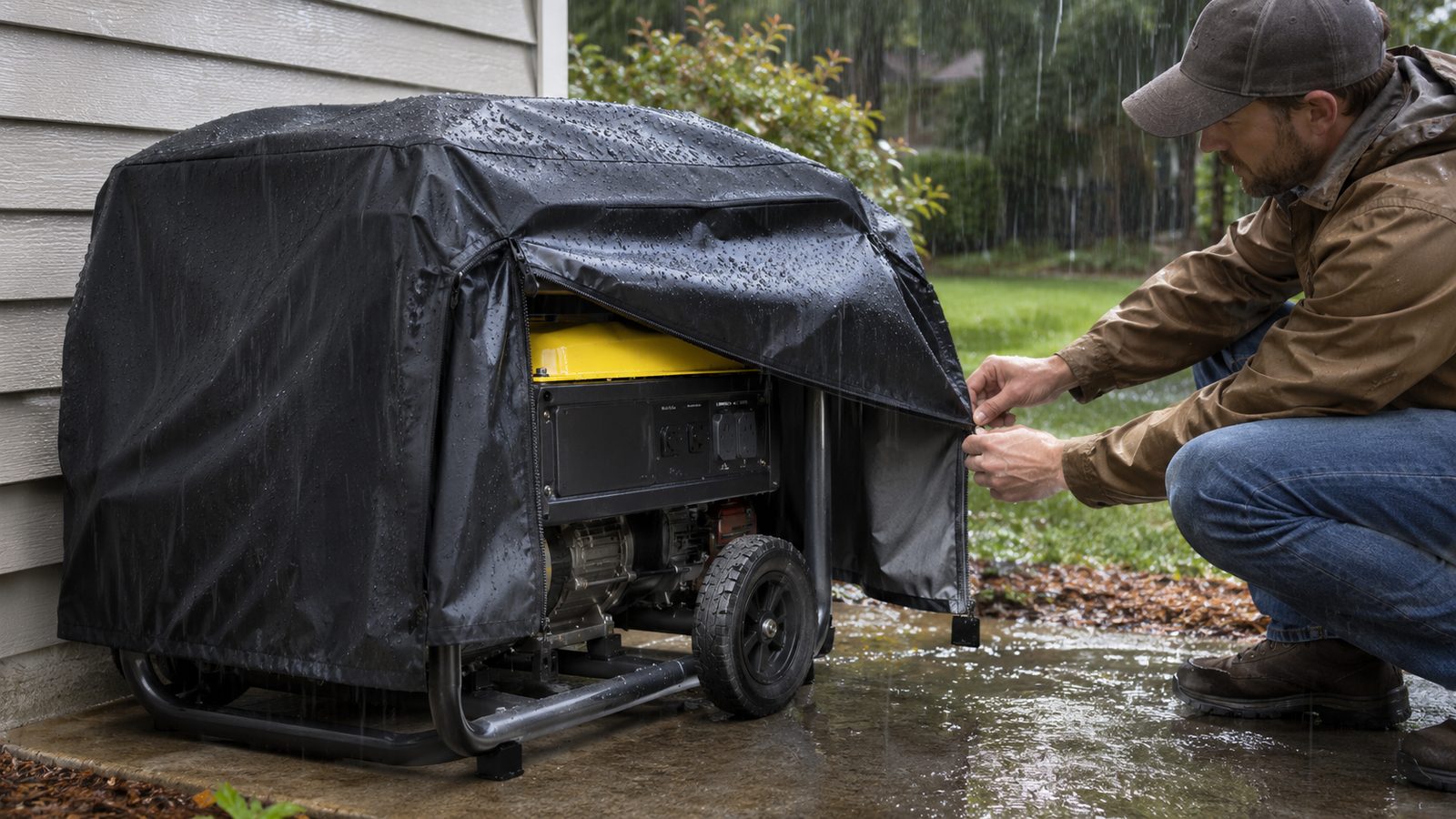
A generator cover can protect expensive equipment from rain, dust, sunlight, snow, and debris. However, storage covers and running covers serve completely different purposes. Choosing the wrong type can create overheating, electrical, or exhaust hazards. Portable generators also require careful placement during operation. The U.S. Consumer Product Safety Commission recommends operating them outdoors and at least 20 feet from homes. Exhaust should always point away from doors, windows, vents, and occupied buildings. Direct answer: Choose a fitted storage cover when your generator is off and cool. Choose a purpose-built running cover only when its manufacturer approves operation beneath it. Check dimensions, ventilation, weather resistance, exhaust clearance, and attachment points before buying any cover.
Generator Cover Options at a Glance
| Cover type | Best use | Typical U.S. price | Can generator run underneath? | Main advantage |
|---|---|---|---|---|
| Fitted storage cover | Storage between uses | $10–$65 | No | Low-cost dust and weather protection |
| Running cover or tent | Outdoor operation in poor weather | $100–$215 | Only when specifically approved | Protects electrical areas while allowing airflow |
| Permanent enclosure | Frequent or long-term outdoor use | $1,000+ in many cases | Depends on design and installation | Stronger long-term protection |
| Basic tarp | Temporary storage only | Varies | No | Cheap and widely available |
Key Takeaways
* Storage covers belong on generators that are shut down and cool. * Running covers use raised structures that preserve cooling and exhaust clearance. * Generator dimensions matter more than wattage alone when checking fit. * Waterproof fabric does not make unsafe generator placement acceptable. * Never move a running generator into a garage, shed, porch, or carport. * Follow your generator manufacturer’s wet-weather instructions before using any canopy.
Why a Generator Needs Protection
Portable generators often spend more time stored than running. During storage, dust can settle around controls, engine components, outlets, and cooling openings. Sunlight and repeated moisture exposure can also age exterior materials and encourage corrosion. A fitted cover creates a simple barrier against these conditions. Many current storage covers use vinyl, polyester, nylon, or layered weather-resistant fabrics. Elastic edges, drawstrings, or straps help prevent wind from pulling the material away. Protection becomes more complicated when the engine is operating. A running generator creates heat and exhaust while drawing cooling air continuously. Any cover used during operation must account for those conditions by design.
Storage Cover vs. Running Cover: Know the Difference
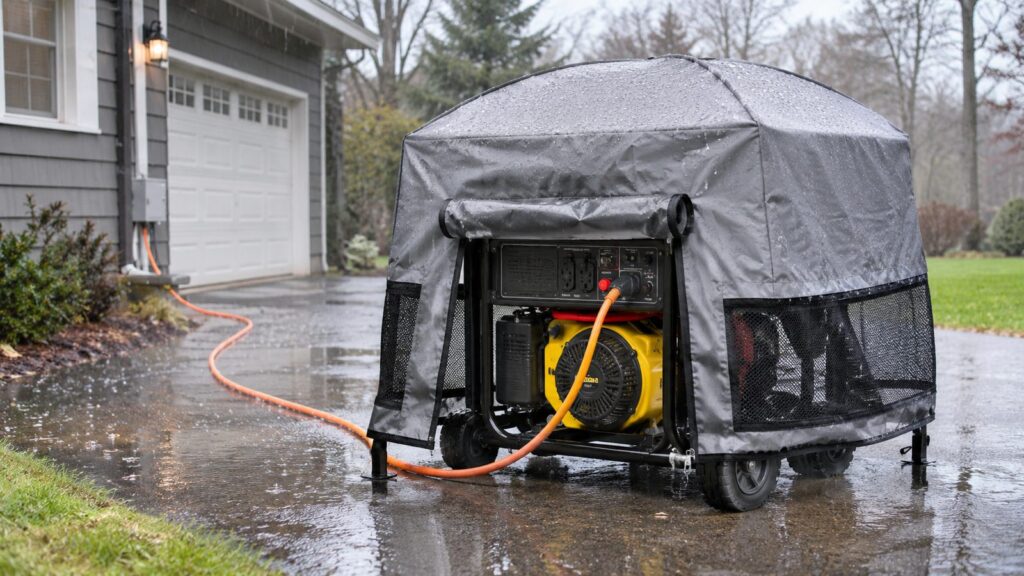
A standard storage cover fits closely around the generator body or frame. It is designed to protect equipment while the machine is switched off. You should remove this type completely before starting the generator. A running cover sits above or around specific sections without enclosing the engine tightly. Many products use rods, clamps, or suspended canopies to keep fabric away from hot surfaces. Their open structure also leaves room for cooling airflow and exhaust discharge. This difference is more important than material thickness or appearance. A waterproof storage cover does not automatically become safe during operation. Only use an operating canopy when the manufacturer specifically approves that purpose.
Storage Covers: Pros and Cons
Storage covers are inexpensive and simple to install. Current U.S. listings commonly start around $10 and rise with size, brand, and construction. They work well for garages, covered outdoor areas, workshops, and protected storage locations.
Pros
* Affordable. * Easy to install and remove. * Available in many sizes. * Helps control dust and debris. * Can reduce direct exposure to sunlight and moisture.
Cons
* Cannot normally stay on during operation. * Limited protection during active storm use. * Cheap materials may tear or fade. * Poor sizing can trap moisture during storage.
Running Covers: Pros and Cons
Running covers cost more because their designs solve a harder problem. They must shield sensitive electrical areas without blocking airflow or placing material near hot exhaust components. Current retail listings commonly place purpose-built systems around $100 to $215.
Pros
* Designed for operation in specified weather conditions. * Raised construction preserves ventilation. * Can help shield outlets and control panels. * Many systems attach directly to portable generator frames. * Some products work for storage and operation.
Cons
* More expensive than storage covers. * Correct sizing is critical. * Installation can take additional preparation. * Weather ratings differ between manufacturers. * They do not eliminate carbon monoxide risks.
How to Choose the Right Generator Cover
The best choice starts with how you plan to use your generator. Someone storing a backup unit for months has different needs from someone expecting storm outages. Work through the following factors before comparing brands.
1. Decide Whether You Need Storage or Running Protection
Start by deciding whether the cover will stay on during operation. Buy a standard fitted model when you only need protection between uses. Choose a running system only when you need manufacturer-approved weather protection during operation. Never assume a loose tarp provides the same protection as an engineered running canopy. It can shift during wind, contact hot parts, or interfere with cooling. A simple storage product should always come off before startup.
2. Measure the Generator Instead of Guessing
Measure length, width, and height at the widest fixed points. Include frame sections that affect how the cover fits. Check the cover maker’s sizing instructions before ordering. Some running systems use frame perimeter instead of simple exterior dimensions. Handles and wheels may be excluded from certain measurements. Follow the specific measurement method shown by the cover manufacturer. Wattage can help narrow the choices, but it does not guarantee fit. Two generators with similar output can use different frame designs. Physical dimensions provide a more dependable starting point.
3. Check Material and Weather Resistance
Outdoor storage exposes fabric to rain, ultraviolet light, snow, wind, and temperature changes. Polyester and vinyl are common because they resist moisture and remain relatively lightweight. Some products add inner liners or reinforced seams for improved durability. A product described as weather-resistant is not necessarily waterproof. Read the manufacturer’s exact wording and published limitations. Buyers in rainy or snowy regions should pay particular attention to seams and fastening systems. Thicker material can improve durability, but construction matters too. Reinforced corners and secure straps may outlast heavier fabric with weak stitching. Choose features based on your storage environment rather than marketing terms.
4. Prioritize Airflow on Running Covers
Running generators need continuous cooling airflow. Their exhaust components also become hot enough to damage unsuitable materials. An operating canopy should keep fabric separated from these areas. Look for a rigid or semi-rigid frame that keeps the canopy elevated. Open sides should allow heat and exhaust to disperse according to manufacturer requirements. Never modify a storage cover to create a homemade running cover. The generator manual remains the final authority for your equipment. Some manufacturers allow certain approved weather tents, while others may advise waiting for precipitation to pass. Follow those instructions even when a cover seller makes broader claims.
5. Inspect Fasteners and Wind Security
Outdoor covers need secure attachment when wind increases. Elastic hems work for many storage situations, while straps can provide additional security. Running covers often use clamps or frame-mounted support systems. Loose fabric can flap, tear, or expose the generator during a storm. A poor attachment system can also let water reach the control panel. Review both the cover specifications and expected local conditions. Published wind ratings can help compare running systems. Still, those ratings do not guarantee safety during every storm. Extreme weather, including the kind featured in these tornado movies, may exceed the limits of both the cover and generator.
Can You Run a Generator in the Rain With a Cover?
You should not run a generator in wet weather simply because something covers it. The CPSC tells consumers to follow manufacturer instructions concerning electrical shock hazards during rain or snow. Those instructions may allow an approved noncombustible tent or recommend waiting for precipitation to stop. Purpose-built running systems are designed to protect key areas while maintaining airflow. Current products from several manufacturers specifically advertise operation during rain or snow. Their approval does not replace your generator’s own operating instructions. Standing water creates another danger that overhead protection cannot solve. Keep equipment on dry, stable ground and away from locations that may flood. Never handle plugs or electrical connections while standing in water.
Generator Safety Rules a Cover Cannot Replace
Carbon monoxide remains the biggest placement concern for fuel-powered portable generators. CPSC guidance says portable units should operate outdoors, at least 20 feet from homes and buildings. Exhaust should point away from windows, doors, vents, and occupied areas. A cover does not make a garage, shed, carport, or porch safe. Opening garage doors or windows does not provide adequate protection from carbon monoxide buildup. Keep the complete generator outdoors during operation. Allow the generator to cool before installing a fitted storage cover. Hot exhaust components can damage fabric and create a fire risk. Follow the manufacturer’s shutdown and refueling instructions every time.
What Size Generator Cover Should You Buy?
Start with your machine’s actual measurements rather than the generator’s advertised wattage. Measure the frame carefully, then compare those numbers with the product’s stated fit range. Leave enough room for installation without buying a cover that hangs excessively loose. For running systems, check the mounting method before ordering. Some products clamp to exposed open frames, while inverter models may use different attachment systems. A design intended for one generator style may not fit another. If your measurements sit at the limit of two sizes, review the manufacturer’s fit guidance. The larger option is not always better because loose fabric can reduce stability. A secure fit usually provides better weather protection and easier handling.
How Much Should You Spend?
Basic fitted storage covers remain the least expensive option. Current U.S. retailer listings show many models between roughly $10 and $65. Price usually rises with dimensions, material quality, brand, and construction. Running covers occupy a higher price range because they include structural components. Products visible from major retailers currently range from about $100 to more than $200. Brand-specific kits and larger frames may cost more. Do not choose by price alone when the cover will be used during operation. Fit, airflow, material clearance, and manufacturer compatibility matter more. Spending less on an unsuitable product can create greater risk and equipment damage.
Our Verdict: Which Type Should You Buy?
Choose a fitted weather-resistant storage cover for most generators stored between emergencies. It gives affordable protection from dust, sunlight, debris, and ordinary moisture exposure. Remove it completely before starting the machine. Choose a purpose-built running cover when outages require outdoor operation during poor weather. Confirm that both the cover maker and generator manufacturer permit your planned setup. Pay special attention to ventilation, electrical protection, frame fit, and weather ratings. Avoid using ordinary tarps as improvised operating shelters. They were not engineered around engine heat, exhaust flow, or electrical access. A purpose-built system is the safer purchase when active weather protection is necessary.
Frequently Asked Questions About Generator Covers
Can you leave a generator cover on while the generator is running?
A normal fitted cover should come off before the generator starts. It can restrict cooling and place material near hot components. Only a purpose-built running canopy should remain installed during operation.
Should a generator be covered outside?
Covering a stored generator can protect it from dust, sunlight, debris, and moisture. The machine should be cool before a fitted storage cover goes on. Outdoor storage requirements still depend on your generator manufacturer’s instructions.
Are generator covers waterproof?
Some covers are marketed as waterproof, while others are described as water-resistant. The distinction depends on fabric, seams, coatings, and product testing. Check the manufacturer’s specifications instead of relying on the product name.
How do I measure my generator for a cover?
Measure the unit’s maximum length, width, and height as directed by the cover manufacturer. Running systems may instead require a frame perimeter measurement. Always compare your numbers with the exact sizing chart before ordering.
Can I use a tarp instead?
A tarp can provide temporary protection for a generator that is turned off and cool. It should not be draped over an operating generator. Heat, airflow, exhaust, and electrical exposure make improvised operating covers risky.
Does a running cover make indoor generator use safe?
No cover makes indoor portable generator operation safe. Fuel-powered generators produce carbon monoxide, which can kill without warning. CPSC guidance requires outdoor operation at least 20 feet from homes and buildings.
Protect the Generator Without Creating a New Hazard
The right weather protection can help extend your generator’s useful life and keep it cleaner between outages. Your first decision should always be whether you need storage protection or weather protection during operation. That distinction determines the design, price, and safety features you should consider. Measure carefully and follow both manufacturers’ instructions before purchasing a running system. Keep portable generators outdoors and well away from occupied buildings during operation. A cover should support safe generator use, never replace the basic safety rules. —
