


Hoarah Loux is the original warrior identity of Godfrey, the first Elden Lord in Elden Ring. Godfrey adopted a lordly name and restrained his violent nature while serving Queen Marika. Near the game’s ending, he abandons that restraint and returns to his former warrior self. The transformation matters because it reveals who Godfrey was before becoming a ruler. His second phase replaces royal armor and axe attacks with brutal grapples, stomps, and bare-handed combat. The change connects his boss mechanics directly with his history as a Badlands chieftain. Direct answer: Hoarah Loux is Godfrey’s original identity in Elden Ring. Before becoming Queen Marika’s consort and the first Elden Lord, he was a fearsome warrior chieftain. During the late-game Godfrey battle, he casts aside his lordly identity, removes Serosh, and returns to fighting as a warrior.
Hoarah Loux at a Glance
| Detail | Answer |
|---|---|
| Game | Elden Ring |
| Other identity | Godfrey, First Elden Lord |
| Original role | Warrior and Badlands chieftain |
| Later role | Queen Marika’s consort and first Elden Lord |
| Affiliation | Queen Marika, Golden Order |
| Important companion | Serosh, the Beast Regent |
| Boss location | Elden Throne, Leyndell, Ashen Capital |
| Encounter type | Required late-game story boss |
| Second-phase style | Bare-handed strikes, grabs, stomps, and shockwaves |
| Main reward | Remembrance of Hoarah Loux |
| Voice actor | Edward Rowe |
Who Is Hoarah Loux in Elden Ring?
Before becoming Godfrey, the future Elden Lord was a warrior associated with the Badlands. The game’s item descriptions identify him as a powerful chieftain who valued strength and battle. His reputation existed before his relationship with Marika changed his place in history. Marika chose him as her consort during the early age of the Erdtree. He then became Godfrey and received the title of first Elden Lord. The new identity represented kingship, responsibility, and service to a growing order. His earlier personality never completely disappeared, though. Serosh, the Beast Regent, became closely connected with Godfrey’s effort to restrain his warrior instincts. That relationship explains one of the late-game battle’s most memorable moments. Readers who enjoy fantasy character histories may also like Newsheck’s Tessarion dragon explainer. That guide similarly separates a character’s identity, relationships, abilities, and story importance. Newsheck’s Entertainment section contains more character-focused features.
Why Did He Become Godfrey?
Becoming Elden Lord required more than winning battles. Godfrey needed to represent Marika’s rule rather than his earlier life as a roaming warrior. Taking a new name helped mark that transformation from fighter to royal consort. Serosh also symbolizes this change. The great lion appears on Godfrey’s back throughout much of his royal presentation. His presence represents restraint placed upon a man known for extreme aggression. Godfrey then fought campaigns connected with the expansion of Marika’s order. Those victories established him as one of the most important figures in the Lands Between. His strength helped build the age that later generations inherited. Yet victory eventually created a problem. Once his great enemies were defeated, Godfrey lost the guidance of grace. That event set the stage for his exile and another dramatic change in identity.
Why Was Godfrey Exiled From the Lands Between?
Godfrey eventually lost grace after his major wars had ended. Marika then sent him and his warriors away from the Lands Between. These exiles became closely connected with the origin of the Tarnished. The game’s Remembrance description explains what happened afterward. Godfrey took his kinfolk with him and joined the Long March of the Tarnished. When that journey ended, he abandoned kingship and became a simple warrior again. That detail makes his two names easier to understand. Godfrey represents the ruler shaped for Marika’s kingdom. His earlier name represents the fighter who exists without the obligations of a crown. The difference is more than cosmetic. Elden Ring repeatedly connects names, titles, bodies, and roles with changing identities. Godfrey’s story turns that theme into something players experience during combat.
What Is Serosh’s Role in Godfrey’s Story?
Serosh is known as the Beast Regent and remains physically attached to Godfrey during much of his appearance. His presence helps communicate that the first Elden Lord is holding something dangerous back. The restrained warrior therefore feels different from the person eventually revealed beneath the title. That changes during the late-game boss fight. Godfrey removes Serosh as the encounter moves toward its second phase. He also abandons his axe and stops fighting like an armored ruler. The resulting transformation has a clear narrative purpose. The player is no longer facing a king who controls his violent nature. They are facing the warrior that existed before the crown. This makes Serosh more than an impressive visual companion. His removal tells the player that restraint has ended. The fight’s sudden increase in physical aggression reinforces that meaning immediately.
Godfrey and Hoarah Loux Are the Same Boss
Players encounter the living Godfrey near the Elden Throne in Leyndell, Ashen Capital. The battle begins with his familiar royal identity and axe-focused combat style. Stomps and large shockwaves make spacing and timing especially important. After enough damage, the encounter changes dramatically. The same opponent becomes a faster bare-handed fighter with grabs and wrestling-inspired attacks. His movements become more aggressive and place greater pressure on nearby players. Guides from Push Square and GamesRadar describe this as the second phase of one encounter. It is not a separate optional boss hidden elsewhere in the world. Defeating both forms is required to continue through the main story. For more game-related coverage, readers can browse Newsheck’s Gaming section. The category collects guides and gaming-focused features in one place. It also gives readers a natural next destination after this character explainer.
Why the Second Phase Feels So Different
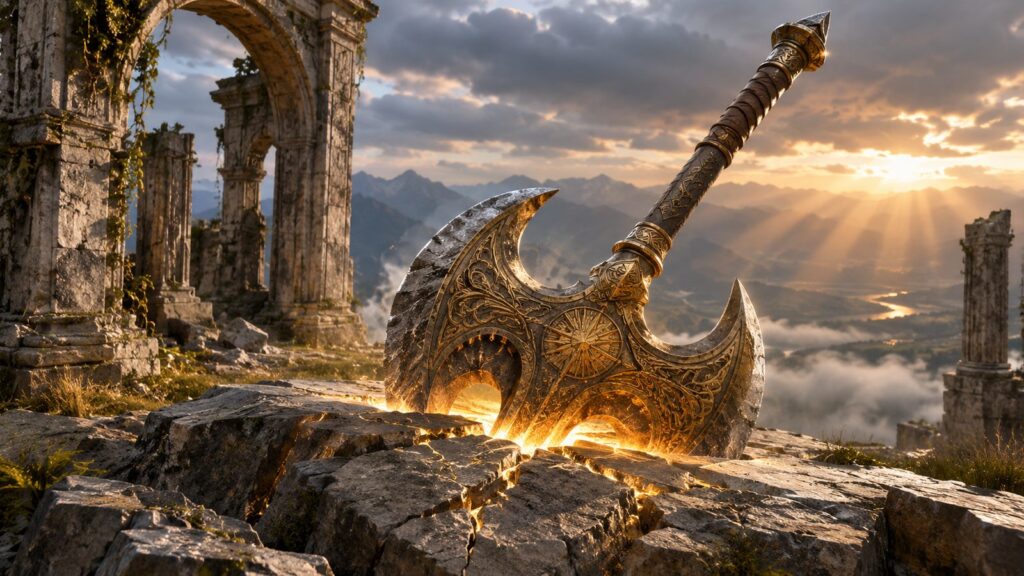
The first phase communicates authority through controlled power. Godfrey carries a huge axe and uses deliberate attacks that dominate large parts of the arena. Even his strongest movements retain the feeling of a disciplined battlefield commander. The second phase removes that discipline almost completely. The warrior closes distance quickly and relies on punches, grabs, kicks, slams, and explosive ground attacks. Players must react to his body rather than watching an enormous weapon. His grab attacks are especially memorable because they resemble professional wrestling moves. The animation emphasizes physical strength instead of magical power or elaborate weapon techniques. That style helps make his original identity instantly understandable without lengthy exposition. The mechanical shift is one of the fight’s strongest storytelling tools. Players feel the difference between Godfrey the ruler and his earlier self. The game explains character history through movement as much as dialogue.
How to Approach the Boss Fight
Patience works better than trying to trade attacks constantly. Watch the ending of his combinations before committing to your own damage. Greedy attacks can leave you exposed to stomps, shockwaves, or powerful grabs. Jumping can help against several ground-based shockwaves. Dodging remains crucial when he closes distance or begins a grab sequence. His recovery after larger attacks can provide safer opportunities to strike. Players using Spirit Ashes can create extra openings by dividing his attention. Cooperative summons can provide the same benefit during difficult attempts. Neither option removes the need to recognize his large area attacks. The exact strategy depends on your build and equipment. Melee characters usually need controlled punish windows, while ranged builds need room to cast safely. Learning the transition between phases matters more than relying on one universal trick.
What Do You Get for Defeating Him?
Victory awards the Remembrance associated with the warrior. Players can exchange it with Finger Reader Enia for special boss-related rewards. The available choices include the Axe of Godfrey and Hoarah Loux’s Earthshaker. The Remembrance can also be consumed for runes. Players interested in unique equipment should inspect the exchange options before consuming it. Remembrance duplication can provide another route toward obtaining both rewards. The reward also carries important story information. Its description explains the exile, the Long March, and Godfrey’s return to a simpler warrior identity. That makes the item useful for lore readers as well as character builds.
Is Nepheli Loux Related to Godfrey?
Nepheli Loux creates one of the game’s most discussed family questions. She shares the Loux name and has strong connections with warrior culture. Those clues have encouraged theories linking her directly with Godfrey’s earlier life. The game does not provide the same explicit confirmation found for several royal relationships. Gideon Ofnir is clearly presented as her adoptive father. Claims about her precise biological connection should therefore be treated as interpretation rather than settled fact. Her surname still matters from a thematic perspective. It connects her with strength, leadership, and the warrior tradition associated with the Badlands. That parallel helps explain why players continue discussing the relationship. Newsheck also examines memorable fictional identities in its Ongo Gablogian character guide. That article focuses on a completely different genre and tone. Both pieces show how alternate identities can become central to understanding a character.
Why This Character Matters to Elden Ring’s Story
The character represents a version of strength that exists before institutions and titles. Godfrey becomes important because political power changes how that strength is presented. His final transformation removes those additions and exposes the person underneath. That idea fits one of the game’s recurring concerns. Titles such as lord, king, consort, and Tarnished constantly shape how characters understand themselves. Losing a title can therefore become as important as gaining one. His encounter also creates an unusual mirror for the player. Both fighters are Tarnished seeking access to the Elden Throne. One is a former lord returning to reclaim purpose, while the other is still trying to earn that position. This gives the battle more meaning than a simple obstacle before the finale. The player effectively confronts someone who has already occupied the role they seek. Defeating him marks another transfer of possibility between old and new contenders.
Frequently Asked Questions
Is Hoarah Loux the same person as Godfrey?
Yes, the names refer to the same character at different points in his life. Godfrey is the royal identity tied to Marika and his position as Elden Lord. His original warrior identity returns openly during the second phase of the late-game battle.
Why does Godfrey kill Serosh?
The scene represents the removal of restraint before the second phase. Serosh had been associated with controlling Godfrey’s violent warrior nature. Removing him allows Godfrey to fight without maintaining the behavior expected from a lord.
Is Godfrey an optional boss?
No, the living Godfrey encounter is part of the main progression toward Elden Ring’s ending. Players must pass this battle before reaching the final sequence. An earlier golden version also appears during progression through Leyndell.
Where do you fight Godfrey’s final form?
The late-game battle takes place at the Elden Throne in Leyndell, Ashen Capital. Players reach this version after major story events transform the capital. The arena appears near the route leading toward the game’s final challenges.
Who voices the character?
Edward Rowe provides the English voice performance for Godfrey and his warrior identity. His performance shifts naturally between controlled authority and aggressive battle dialogue. That contrast supports the transformation shown during the boss encounter.
The Warrior Behind the First Elden Lord
Godfrey’s story becomes clearer once his two identities are viewed together. One represents kingship, duty, and controlled violence under Marika’s rule. The other represents the uncompromising fighter who existed before those responsibilities. That transformation also explains why his final boss fight feels so memorable. The battle does not simply increase speed or damage during phase two. It removes the character’s royal identity and lets his original nature determine every attack. For players interested in Elden Ring lore, that makes him one of the game’s clearest examples of gameplay telling a story. His history, Serosh, exile, Tarnished status, and combat style all reinforce the same idea. The first Elden Lord was a warrior before he was ever a king. —
